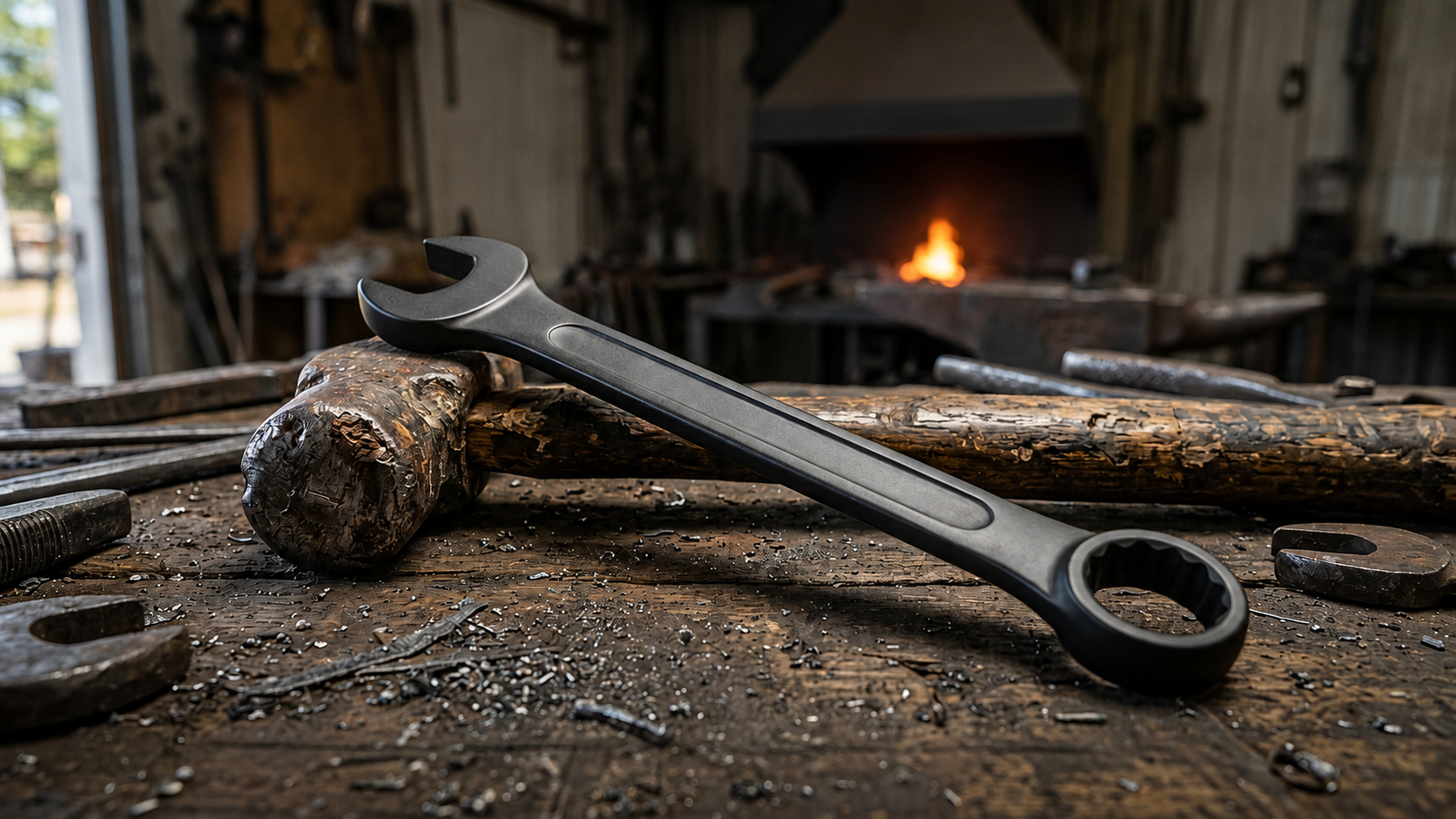
Every garage has one of these. A tool dropped off a ladder once, rained on more than it should’ve been, spent a decade in a toolbox, and still looks decent. Right next to it, the identical tool bought the same week is dull, pitted, half eaten by rust. Same steel. Same manufacturer. Wildly different outcomes.
Most of the time that gap comes down to what’s on the surface, not what’s underneath. Increasingly, that surface is a ceramic based finish called Cerakote, and enough people have watched it survive things that shouldn’t survive that the question keeps coming up: can this make something almost impossible to wreck? Worth answering honestly, not the way a sales page would.
What Cerakote Actually Is
It starts life as a thin liquid, sprayed onto a part, then baked in an oven, where heat locks the coating on. Ceramic particles mixed into the resin cross link into a film that’s bonded in, not just sitting there. Paint, by comparison, rests on a surface. This ceramic coating process behaves more like a second skin, the whole reason it outlasts a can of spray paint. When paint fails, the film usually separated from the metal underneath. A properly cured ceramic coating doesn’t have that weak spot, since there’s no separate film to peel away.
From Firearms to Almost Everything
Cerakote earned its reputation in the firearms industry, where a finish has to survive holster wear, sweat, and constant handling without degrading. Once other industries noticed how well it held up, applications multiplied fast. Grill manufacturers coated grates that used to rust after one humid summer. Automotive shops finished engine components that previously faded within a season. Medical device makers picked it up for instrument housings that go through sterilization cycles daily.
What ties these industries together isn’t the sector; it’s the problem: a surface built to survive constant abuse without needing refinishing every year. There’s a good breakdown of that shift in this earlier look at why Cerakote became the go-to finish for so many industries.
Paint, Powder Coating, Anodizing, and Where Cerakote Fits
Every finishing option trades off cost, durability, and application differently.
- Paint is thin and inexpensive, but relies on a soft film that chips easily under friction.
- Powder coating adds thickness and holds up better against general wear, though that thickness can crack under a sharp hit.
- Anodizing converts aluminum’s surface into a hardened oxide layer instead of adding one on top. The resulting porous oxide layer resists corrosion beautifully, but only works on aluminum and titanium, adding little abrasion resistance.
- Cerakote combines a thin ceramic hardened film with strong chemical resistance and flexibility, landing somewhere none of the others reach alone.
The Chemistry Behind the Durability
Two things kind of do the heavy lifting: thinness and hardness, really. The coating usually runs a few thousandths of an inch, so it doesn’t add much bulk nor mess with the tolerances, and because it stays thin it can flex along with the part instead of snapping under stress. Ceramic particles inside the resin also push the hardness higher than bare metal or plastic gets on its own, so a coated wrench just shrugs off scratches that would definitely scuff up an uncoated one.
Corrosion resistance is harder to wave off as marketing, since it’s measurable. Run a coating through salt spray testing for a few hundred hours and the gap between a coating that protects and one that just looks good shows up fast. Cerakote generally comes out ahead of bare metal and painted surfaces there.
Where Cerakote Performs Best
Everyday Tools
Kitchen knives keep an edge longer and resist rust once coated. Wrenches and pliers that used to pit after a couple seasons outdoors hold up noticeably longer, part of why hobbyists coat their own sets.
Outdoor Gear
Fishing reels shrug off saltwater spray that would otherwise eat through bare metal in weeks. Bike components stay scratch free through years of trail riding despite constant dirt and moisture.
Industrial Parts
Components fresh off precision machining equipment often move straight into a coating booth, since manufacturers want tight tolerances and protection in the same part. Parts that go through laser engraving before coating hold that detail permanently instead of it wearing away.
What Cerakote Cannot Protect Against
Now for the part that doesn’t sell as well. Drop something heavy on a coated part, and it dents, same as uncoated, since the coating moves with the metal rather than standing in front of it. Gouge deep enough to hit bare metal and rust takes hold right there, coating or not. Leave a part somewhere hotter than it’s rated for, and it discolors, and lighter colors wash out faster in the sun. None of this knocks the coating. It’s a reminder it’s a finish, with limits.
Myths Worth Retiring
Somewhere along the way, the internet decided Cerakote is bulletproof. It isn’t, and a blade will still cut through it given enough force. It won’t turn a plastic part into steel either. If the substrate was never strong to begin with, a coating on top won’t change that. More isn’t better, since a thicker coat than a part calls for hurts adhesion, usually meaning more chipping.
Why Timing Matters in Product Development
The best time to think about finishing is early, on the drawing board, not after the design is locked and protection becomes an afterthought. Anything headed outdoors, near salt water, or into hard daily handling is a good candidate for corrosion resistant finishes chosen up front, since bolting on protection later tends to cost more.
It’s not only about the coating. How a part gets machined and prepped before it reaches the booth affects how long the finish hangs around, sometimes more than the chemistry even does. Teams that bring finishing into the conversation early, instead of scrambling right before shipping, end up with parts that really last as intended. There’s also a quieter factor in there: a scratched or rusted part reads as cheap even if it still works, and on the flip side, something still keeping its finish looks like better quality before anyone tests it.
So back to the original question. Can Cerakote make an everyday object almost indestructible? It gets closer than almost anything else on the market. Across a wide range of uses it outlasts paint, holds up better than powder coating against chemicals, and resists corrosion in ways few finishes can touch. But indestructible isn’t on the table, not for Cerakote or anything else. Enough impact, heat, or damage deep into the base material will eventually win. What Cerakote delivers is more time, less upkeep, and a part that looks the way it should for a lot longer.
A Finish That Starts Early, Not at the End
Finishing works better baked into a project from the start rather than tacked on right before something ships. That’s pretty much how Prizma Works approaches it, kind of treating a coating like Cerakote as just another call in the way a product is designed and built, not something you “solve” once the part is already finished. Material selection, tolerances, and the finishing work go better as one conversation, not three separate talks, and the pieces that come out of that kind of process usually look the part years down the line.
Frequently Asked Questions
Cerakote how long does it last? Usually several years, sometimes longer, if it was prepped right and used normally. If you get heavy abuse or extreme conditions, then it’ll wear down faster or, well, at least it shortens the timeline.
Cerakote vs powder coating, is one better? It depends on the job. Cerakote is thinner, and it tends to handle chemicals better, while powder coating is more about cushioning the harder bumps and impacts in certain situations.
Can Cerakote stop rust? It really slows corrosion since it seals the surface, but if the coating gets nicked or broken all the way down to bare metal, then rust can still start, no matter what.
Can Cerakote go on aluminum? Yes, it can. Aluminum works, same for steel, polymers, and a bunch of other substrate types people use in production; they all work out pretty normally.
Does Cerakote scratch easily? Compared with typical paint, no, not really. But sharp stuff, or hard strikes, can still leave marks or chip it if the force is high enough; it’s just that normal everyday scuffing usually isn’t a big problem.
Can Cerakote be repaired? Most of the time, yes. You can strip down the damaged areas and then recoat, though doing a complete recoat usually looks cleaner than fixing one small spot only.